Rotator Wrecker Recovery Fayetteville NC is the specialized service you need when your commercial vehicle is overturned, off-road, or in a position where standard towing equipment simply won't work. When your semi is on its side in a ditch along I-95, or your loaded trailer has jackknifed on an embankment near Fort Liberty, you need more than a standard heavy wrecker—you need a rotator with the boom capacity, winch power, and operator expertise to execute a safe, damage-free recovery. Our team at Towing Services Fayetteville Nc provides 24/7 emergency rotator service throughout Fayetteville, Hope Mills, Spring Lake, and the entire Cumberland County corridor, with rapid response to the I-95 and I-295 commercial routes that serve our region's logistics and military installations.
What Is Rotator Towing Service & When You Need It
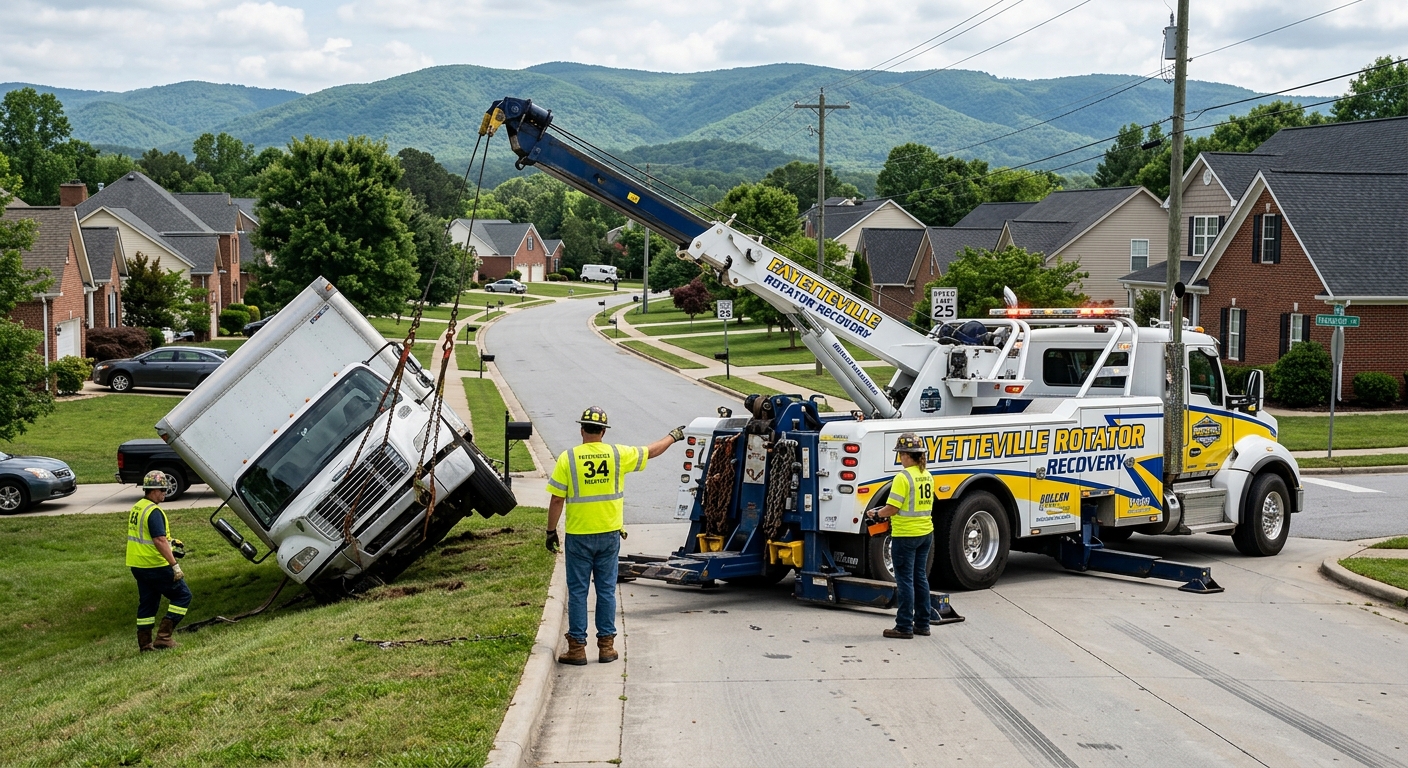
Rotator towing service represents the pinnacle of heavy duty wrecker recovery capability, designed specifically for situations where vehicle positioning, weight, or terrain make standard towing impossible. A rotator wrecker features a boom that extends 30 feet or more with full 360-degree rotation, allowing operators to approach recovery from any angle—critical when your vehicle is against a barrier, over an embankment, or positioned where direct pulling would cause additional damage. Unlike conventional wreckers that can only pull in a straight line from their chassis position, rotator equipment pivots independently, letting our team establish optimal rigging points and lift vectors that protect your vehicle during extraction.
You need rotator recovery service when your heavy vehicle faces any of these scenarios:
- Overturned or rolled commercial trucks requiring uprighting and stabilization before transport
- Vehicles in ditches, ravines, or off embankments where approach angles prevent standard wrecker access
- Jackknifed trailers blocking multiple lanes where repositioning requires lift and rotation simultaneously
- Bridge, overpass, or complex site recoveries where clearance and maneuvering space are limited
- Any recovery where load shifting, cargo transfer, or precise positioning is critical to prevent additional damage
The difference between calling a rotator team immediately versus attempting recovery with inadequate equipment often determines whether you face a 2-hour resolution or a 12-hour nightmare with compounding costs. Our rotator wrecker recovery team in Fayetteville responds with the right equipment the first time, eliminating the costly delays and additional damage that occur when standard heavy duty wreckers prove insufficient. Call (910) 331-3791 the moment you realize your situation requires rotator capability—we'll confirm equipment availability and dispatch immediately.
Boom Capacity & Vertical Lift: 50–75 Ton Recovery Power
Our rotator wrecker delivers 50 to 75 tons of lifting capacity with vertical reach that standard wreckers simply cannot match. This winch capacity means we can handle fully loaded semi-trucks averaging 40 tons, construction equipment, and even multiple-vehicle recovery scenarios without requiring additional heavy equipment coordination. The boom extends over obstacles, barriers, and terrain features, establishing rigging points directly above or beside your vehicle regardless of ground-level access limitations. When your recovery demands precision lifting combined with lateral repositioning—pulling a vehicle up an embankment while simultaneously rotating it to prevent rollovers—our rotator equipment executes both movements in a single coordinated operation.
The vertical lift capability proves essential in embankment and ditch recovery situations common along Fayetteville's highway corridors. Standard wreckers pulling from road level create dangerous angles that can flip vehicles or snap rigging equipment; our rotator boom positions directly over the recovery site, lifting straight up with controlled stabilization. This approach reduces recovery time by 60% compared to multi-wrecker attempts and virtually eliminates secondary damage during extraction—protecting your equipment investment and reducing insurance claim complications.
Rotator vs. Standard Heavy Wrecker: Why Positioning Matters
Standard heavy duty wreckers max out at 25-ton capacity and can only apply force in the direction their chassis faces—a critical limitation when vehicle positioning, terrain, or roadway configuration prevents direct approach. If your semi has gone over a guardrail, a standard wrecker pulling from the road creates a dangerous angle that risks additional rolling or structural damage to your vehicle's frame and cargo area. Rotator equipment eliminates this positioning constraint entirely: the boom rotates independently of the truck chassis, establishing optimal pulling angles from any approach direction while the wrecker remains safely positioned on stable ground.
The positioning advantage becomes even more critical in recovery scenarios involving cargo transfer or load securement. When your overturned vehicle contains hazmat, perishable goods, or high-value freight that must be secured before uprighting, our rotator boom provides the stabilization anchor point while our team coordinates cargo handling. Standard wreckers lack this capability—they're pulling tools, not positioning tools—forcing you to coordinate multiple service providers and extending your recovery timeline by hours. Our rotator wrecker service handles the entire recovery process as a single coordinated operation, from initial stabilization through final transport, reducing your incident management burden and getting your equipment back in service faster.
Heavy Duty Wrecker Recovery Near Me — Off-Road & Embankment Extraction
Heavy duty wrecker recovery near me searches spike during the exact moments when commercial operators realize their vehicle is in a position that standard towing cannot resolve—and those moments demand immediate response from a team with rotator capability and off-road recovery expertise. Our heavy wrecker service in Fayetteville NC specializes in the complex extraction scenarios that shut down operations and bleed revenue with every passing hour: vehicles that have left the roadway, equipment stuck in construction sites or soft terrain, and accident scenes where positioning makes conventional recovery impossible. We respond throughout Fayetteville, Eastover, Stedman, and the wider Fort Liberty logistics corridor with equipment staged for rapid deployment to I-95, I-295, and rural recovery sites across Cumberland and Harnett Counties.
Off-road and embankment extraction requires more than powerful equipment—it demands rigging expertise, terrain assessment capabilities, and stabilization protocols that prevent your recovery from becoming a more dangerous situation. Our operators assess ground stability, establish multiple anchor points, and execute controlled lifts that keep your vehicle level throughout extraction. We handle recovery scenarios other companies turn down because they lack the equipment, insurance coverage, or operational experience to execute safely.
- Embankment and ravine extraction with boom positioning that eliminates dangerous pulling angles
- Soft terrain recovery using stabilization techniques that prevent equipment from sinking during extraction
- Multi-vehicle incident recovery coordinating simultaneous operations at complex accident scenes
- Rural and remote site recovery where access requires off-road capable heavy equipment
- Water-adjacent recovery (creek beds, retention ponds, drainage areas) requiring environmental coordination
Every hour your heavy equipment or commercial vehicle remains off-road costs you in rental replacements, schedule disruptions, and mounting recovery complexity as weather and ground conditions deteriorate. Our heavy duty wrecker recovery team treats your emergency as our priority—dispatching immediately and arriving with equipment pre-rigged for your specific scenario based on your initial call description. Contact (910) 331-3791 for immediate heavy wrecker service anywhere in the Fayetteville area, and we'll provide estimated arrival time and equipment confirmation before our team leaves our facility at 931 Creekside Dr, Fayetteville, NC 28301.
Overturned Semi Recovery: Stabilization & Uprighting Process
Overturned semi recovery represents one of the most technically demanding operations in the towing industry, requiring precise stabilization before any uprighting attempt begins. When your commercial truck has rolled onto its side or roof, the cargo load has shifted, fluids are leaking from compromised systems, and the vehicle's center of gravity creates rollover risk during any repositioning attempt. Our rotator wrecker team begins every overturned semi recovery with comprehensive stabilization: deploying cribbing and blocking to prevent movement, assessing structural integrity to identify damaged frame components, and establishing multiple rigging points that distribute lifting forces evenly across your vehicle's strongest attachment locations.
The uprighting process itself requires coordinated boom positioning and winch control that gradually returns your semi to wheels-down position while preventing secondary rollovers or frame twisting. Our operators execute controlled lifts in incremental stages, pausing to reassess rigging and adjust boom angles as your vehicle's center of gravity shifts during rotation. This methodical approach takes longer than aggressive single-pull attempts—but it's the difference between a recoverable vehicle and a total loss due to recovery damage. We coordinate with your insurance carrier throughout the process, providing photo documentation at each stage and securing cargo or transferring loads when required before uprighting begins.
Jackknifed Trailer & Ditch Recovery Scenarios
Jackknifed trailer recovery demands simultaneous control of both tractor and trailer positioning—a task that requires rotator capability when either unit has left the roadway or when repositioning must occur in live traffic lanes. When your trailer has swung perpendicular to your tractor, standard recovery approaches that simply winch one unit create additional stress on the connection point and risk structural damage to both your fifth wheel and trailer kingpin. Our rotator boom establishes independent lifting and positioning control over the trailer, allowing us to reduce the jackknife angle while supporting the trailer's weight—eliminating stress on your connection hardware and enabling safe separation if damage assessment requires it.
Ditch recovery scenarios combine the challenges of off-road extraction with the positioning demands of returning vehicles to road level without causing additional damage during the climb. Pulling a vehicle straight up an embankment creates frame stress and risks rollovers as weight shifts; our rotator recovery technique lifts vertically while simultaneously pulling horizontally, keeping your vehicle level throughout extraction. We've recovered fully loaded trailers from drainage ditches along the I-95 corridor where ground clearance and soft soil prevented any other approach—situations where attempting recovery with inadequate equipment would have resulted in stuck wreckers and exponentially increasing costs. Our team arrives with rigging equipment, stabilization materials, and backup equipment coordination already planned based on your site description.
Bridge, Overpass & Complex Site Recoveries
Bridge and overpass recovery operations present unique challenges where overhead clearance, guardrail positioning, and limited maneuvering space make conventional heavy wrecker approaches impossible. When your vehicle has struck bridge infrastructure or come to rest against overpass barriers, our rotator boom extends over railings and barriers to establish rigging points, lifting your vehicle vertically before repositioning for transport—all while our wrecker remains in a safe staging position that doesn't obstruct traffic or compromise structural elements. Complex site recoveries near Fort Liberty, in Fayetteville's industrial corridors, or at construction zones often involve coordination with multiple agencies, traffic control requirements, and strict timeline demands for roadway clearance.
We maintain relationships with NC DOT, Fort Liberty military police, and local emergency management to expedite permitting and clearance coordination during complex recovery operations. Our operators arrive with traffic control equipment, scene safety protocols, and communications equipment that integrates with incident command structures at major accident scenes. This operational readiness means your recovery begins immediately upon our arrival rather than waiting for additional coordination—critical when every minute of highway closure triggers escalating fines and regulatory scrutiny. Call us first for any recovery scenario where site complexity, access limitations, or regulatory coordination will impact your recovery timeline.
24 Hour Rotator Service & Emergency Towing in Fayetteville
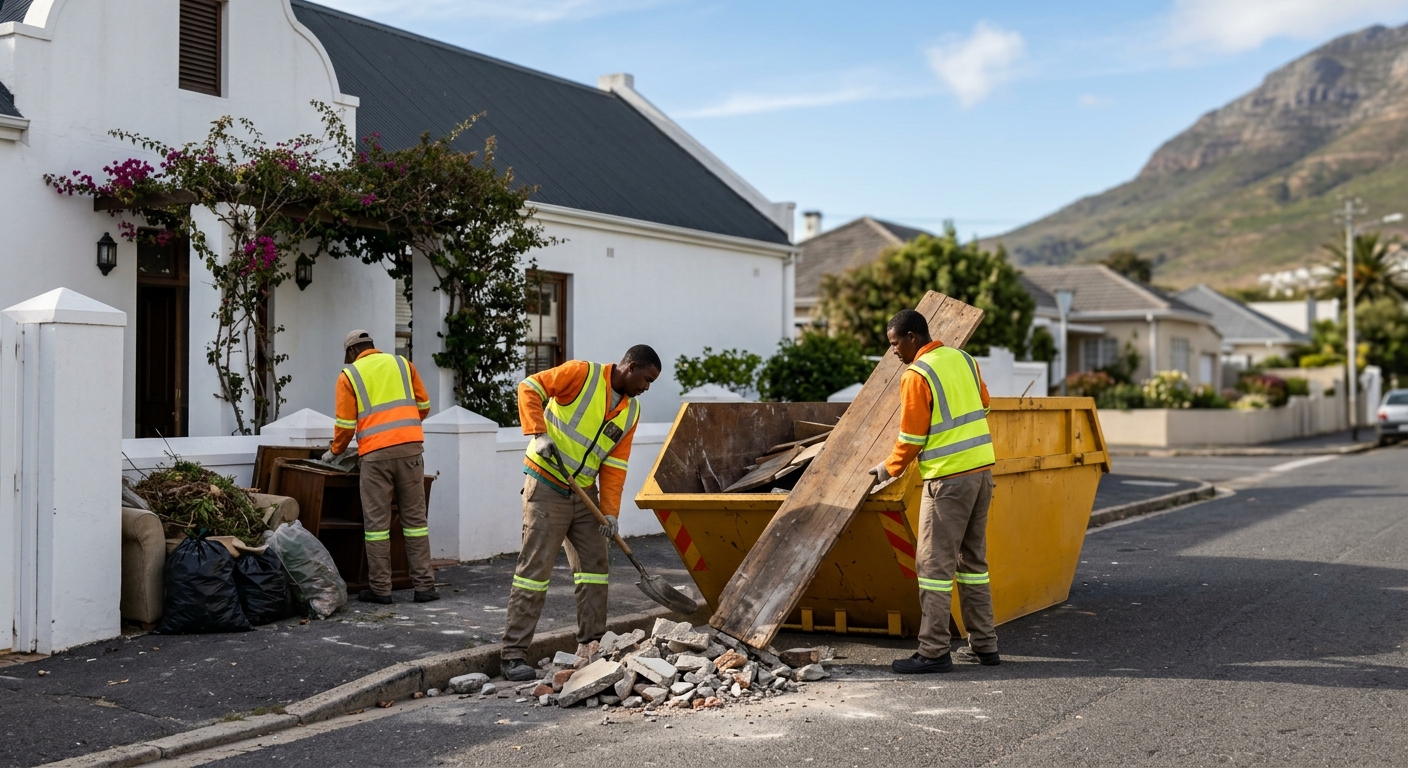
24 hour rotator service means our equipment and certified operators are available every hour of every day—because heavy vehicle emergencies don't respect business hours, and recovery delays compound costs with every passing minute. Our emergency towing team in Fayetteville maintains staffed dispatch around the clock, with rotator equipment pre-positioned for rapid response to the I-95 and I-295 corridors, Fort Liberty perimeter routes, and Fayetteville's commercial and industrial zones. When you call (910) 331-3791 at 2 AM on a Sunday or during a holiday, you reach our active dispatch team—not an answering service—and we provide immediate equipment availability confirmation and estimated arrival time based on your location and our current unit positioning.
Emergency rotator towing requires more than equipment availability—it demands operational readiness that includes backup units, parts inventory, and operator teams trained to execute complex recovery in darkness, adverse weather, and high-stress conditions. We invest in redundant equipment capacity specifically to ensure that our 24/7 availability promise holds even when we're managing multiple simultaneous incidents. Our response protocol prioritizes commercial and fleet emergencies where recovery delays impact business operations, supply chains, and contractual commitments—we understand that your emergency creates ripple effects throughout your organization, and we treat rapid response as a core operational requirement rather than a marketing claim.
- True 24/7/365 dispatch with immediate operator availability—no callbacks or queue systems during emergencies
- Equipment pre-positioned at strategic locations for sub-30-minute response to primary commercial corridors
- Night-recovery lighting and safety equipment for complete scene illumination during darkness operations
- Weather-capable operations continuing through conditions that ground other recovery providers
- Backup equipment and operator teams ensuring service continuity even during high-incident periods
The difference between a 24-hour recovery company and a true emergency rotator service becomes apparent the moment you call during a crisis: Are they answering immediately with equipment status and dispatch confirmation, or are they promising callbacks and checking availability? Our emergency towing infrastructure exists specifically to deliver immediate response when your situation is critical, your vehicle is blocking infrastructure, or your business is hemorrhaging revenue with every hour of downtime. Save (910) 331-3791 in your emergency contacts now—before you need rotator recovery—so you're calling the right team when seconds count.
Rapid Response Times: I-95 & I-295 Corridor Coverage
I-95 and I-295 represent the primary commercial transportation arteries through Fayetteville and Cumberland County, carrying over 40,000 truck movements monthly through our service area—and every incident on these corridors triggers immediate pressure for rapid recovery and roadway clearance. Our rotator wrecker staging positions are specifically located to provide sub-30-minute response to incidents anywhere along the I-95 corridor from the Harnett County line through Hope Mills, and the I-295 bypass from its northern junction through the western Fayetteville commercial district. We monitor traffic conditions and incident reports in real-time, pre-positioning equipment during high-traffic periods and weather events that historically increase accident frequency.
Rapid response time means more than how quickly we arrive—it encompasses how quickly we execute recovery once on-scene. Our operators receive detailed scenario information during dispatch, arriving with recovery plans already formulated and equipment pre-rigged for your specific situation. We bring stabilization materials, backup rigging equipment, and traffic control gear on every rotator dispatch, eliminating return trips for additional materials that extend your recovery timeline. This operational approach has established our reputation among fleet managers and logistics coordinators as the rotator service that delivers complete resolution in a single response—critical when highway patrol has given you a 2-hour clearance deadline and your cargo has temperature-sensitive or delivery-deadline constraints.
Fort Liberty & Commercial Corridor Rapid Deployment
Fort Liberty (formerly Fort Bragg) and the surrounding commercial corridors that serve military logistics create unique recovery demands where rapid deployment must combine with security clearances, military coordination protocols, and the operational tempo of a major military installation. Our team maintains the credentials, communication protocols, and coordination relationships required to operate efficiently at incidents involving military vehicles, on-base emergencies, and the commercial carriers that serve Fort Liberty supply chains. We understand that recovery delays near base access points create cascading impacts on military operations, and we maintain priority response capabilities for incidents in the Fort Liberty perimeter area including Bragg Boulevard, Yadkin Road, and All American Freeway.
The commercial corridors radiating from Fort Liberty—particularly the Bragg Boulevard and Murchison Road industrial zones—concentrate heavy vehicle traffic serving defense contractors, logistics warehouses, and military supply operations. Our rapid deployment capability in these areas reflects both equipment positioning and operational familiarity: our operators know the access points, staging areas, and traffic patterns that enable efficient recovery execution in congested commercial environments. We coordinate with facility security, provide advance notification to affected businesses when recovery operations will impact access, and execute recoveries with the operational urgency that military and defense supply chains demand.
Fort Bragg-Area Fleet Emergency Services
Fort Bragg-area fleet emergency services require providers who understand military and defense contractor operational requirements, security protocols, and the documentation standards that govern government and military logistics. Our rotator wrecker team serves commercial fleets, defense contractors, and military-adjacent logistics operations with the same rapid response and professional execution we provide to civilian commercial operators—but enhanced with the security awareness, communication discipline, and documentation precision that military-related operations demand. We maintain relationships with base transportation offices, military police, and installation access control to expedite coordination during emergencies involving military vehicles or contractors operating under military authority.
Fleet emergency services extend beyond individual incident response to include preventive planning, contract recovery programs, and coordination protocols that integrate our rotator service into your fleet's emergency response procedures. We work with fleet managers to pre-qualify our service, establish direct dispatch numbers, and coordinate billing procedures that align with your organization's procurement and emergency service requirements. For fleets serving Fort Liberty or operating in the Fayetteville military logistics ecosystem, this advance coordination eliminates the chaos of searching for qualified recovery services during emergencies—your drivers and dispatchers already know to call (910) 331-3791, and we already have your fleet information, insurance coordination, and specific handling requirements documented in our dispatch system.
Overturned Semi & Rollover Recovery With DOT Compliance
Overturned semi and rollover recovery operations trigger immediate DOT compliance requirements that impact how recovery is executed, documented, and reported—requirements that create legal and financial liability if not properly managed during the recovery process. Our rotator wrecker team executes every rollover recovery with full awareness of NC DOT highway clearance regulations, FMCSA incident reporting requirements, and the evidence preservation needs that insurance carriers and safety investigators demand. We document scene conditions before recovery begins, maintain photographic records throughout the uprighting and extraction process, and provide the detailed incident reports that satisfy DOT inspectors, insurance adjusters, and your organization's safety management systems.
DOT compliance during recovery extends to scene safety protocols, hazmat coordination when cargo involves regulated materials, and rapid clearance timelines that NC DOT enforces on interstate and primary highway incidents. We arrive equipped with traffic control devices, scene safety equipment, and communications gear that meets incident management standards—establishing safe work zones that protect our operators, your personnel, and passing motorists throughout the recovery operation. Our team coordinates directly with highway patrol, DOT incident managers, and emergency responders to ensure our recovery plan aligns with clearance priorities and regulatory requirements, eliminating conflicts that extend timeline and increase your exposure to clearance-delay penalties.
- Comprehensive photo documentation at each recovery stage satisfying insurance and legal evidence requirements
- NC DOT rapid clearance coordination ensuring compliance with highway closure regulations and timeline requirements
- Hazmat assessment and coordination when cargo involves regulated materials requiring specialized handling
- FMCSA incident reporting support providing technical recovery details required for commercial vehicle accident reports
- Scene safety protocols meeting OSHA and DOT work zone standards protecting all personnel during recovery operations
The compliance dimension of rollover recovery often receives inadequate attention from towing providers focused solely on equipment operation—creating post-recovery complications when insurance carriers dispute coverage, safety investigators question recovery procedures, or DOT audits reveal documentation deficiencies. Our approach treats compliance as integral to recovery operations rather than administrative afterthought, ensuring that when your overturned vehicle is back on its wheels and ready for transport, you also have the complete documentation package that closes your incident file cleanly. This attention to compliance detail reflects our years of experience serving commercial carriers, fleet operators, and logistics companies where professional documentation standards are simply expected rather than negotiable.
Load Securement & Cargo Transfer During Recovery
Load securement and cargo transfer become critical considerations when your overturned or rolled vehicle contains freight that has shifted during the incident or must be removed before safe uprighting can occur. Our rotator recovery process includes cargo assessment as part of initial stabilization—determining whether load shifting has created additional rollover risk, whether cargo must be transferred before uprighting to prevent weight distribution problems, and whether your specific cargo type requires specialized handling or storage during recovery. We coordinate cargo transfer operations with your freight broker, consignee, or logistics team, arranging secondary vehicles for cargo removal when required and documenting cargo condition to support insurance claims or liability determinations.
The cargo transfer capability proves essential when your overturned load includes temperature-sensitive perishables, hazardous materials requiring placarding and specialized containers, or high-value freight where unsecured exposure creates theft risk or additional insurance complications. We maintain relationships with local freight transfer services, hazmat coordinators, and secure storage facilities that enable rapid cargo coordination during recovery operations—eliminating the delays that occur when drivers and fleet managers must arrange these services during emergencies while managing multiple other incident response demands. Our integrated approach treats cargo management as a component of complete recovery service rather than expecting you to coordinate multiple vendors during your worst operational day.
Scene Safety & Hazmat Coordination
Scene safety protocols at every rotator recovery operation protect our team, your personnel, emergency responders, and passing motorists from the hazards created by overturned vehicles, fuel spills, cargo releases, and recovery equipment operations. We establish controlled work zones with traffic control devices meeting DOT standards, deploy scene lighting for night operations, and maintain constant communication with recovery team members throughout lifting and extraction operations. Our operators complete ongoing safety training including hazmat awareness, confined space protocols, and emergency response procedures—ensuring they recognize safety threats and execute appropriate protective measures regardless of incident complexity or environmental conditions.
Hazmat coordination becomes critical when your overturned vehicle carried regulated materials, when fuel system damage has created diesel spills requiring containment, or when cargo includes materials triggering notification requirements under CERCLA or state environmental regulations. Our team conducts immediate hazmat assessment upon arrival, identifies placarded materials, and coordinates with hazmat response teams when cargo or spill conditions exceed our handling capabilities. We maintain spill containment equipment on our rotator units for minor fuel releases, preventing small incidents from escalating into reportable environmental events—but we also know when to request specialized hazmat resources rather than attempting containment beyond our training and equipment capabilities. This safety-first approach protects you from the liability and regulatory complications that occur when recovery operations exacerbate hazmat conditions through inadequate response.
NC DOT Highway Clearance & Incident Documentation
NC DOT highway clearance requirements impose specific timelines for incident resolution on interstate highways and primary routes, with escalating penalties when disabled vehicles block travel lanes beyond initial response periods. Our rotator wrecker service operates with full awareness of these clearance standards, coordinating directly with DOT incident managers and highway patrol to establish recovery timelines, identify acceptable staging areas for uprighting operations when vehicles must be moved before recovery, and provide real-time status updates throughout extended recovery operations. We understand that clearance compliance is not optional—it's a regulatory requirement with financial consequences—and we structure recovery operations to meet clearance deadlines while maintaining safety and damage-prevention standards.
Incident documentation supporting DOT requirements, insurance claims, and your organization's safety records begins the moment we arrive on scene. We photograph vehicle position, visible damage, cargo conditions, and environmental factors before recovery begins—establishing baseline documentation that protects against disputes about pre-existing damage or recovery-caused harm. Throughout the recovery process, we document rigging positions, lifting sequences, and repositioning steps, creating a complete visual record of our recovery methodology. Upon completion, we provide comprehensive incident reports detailing equipment used, personnel involved, timeline from dispatch through transport, and any complications encountered during recovery—giving you the documentation package that satisfies investigators, insurance adjusters, and regulatory auditors without requiring follow-up information requests.
Commercial Towing & Fleet Recovery Services Fayetteville
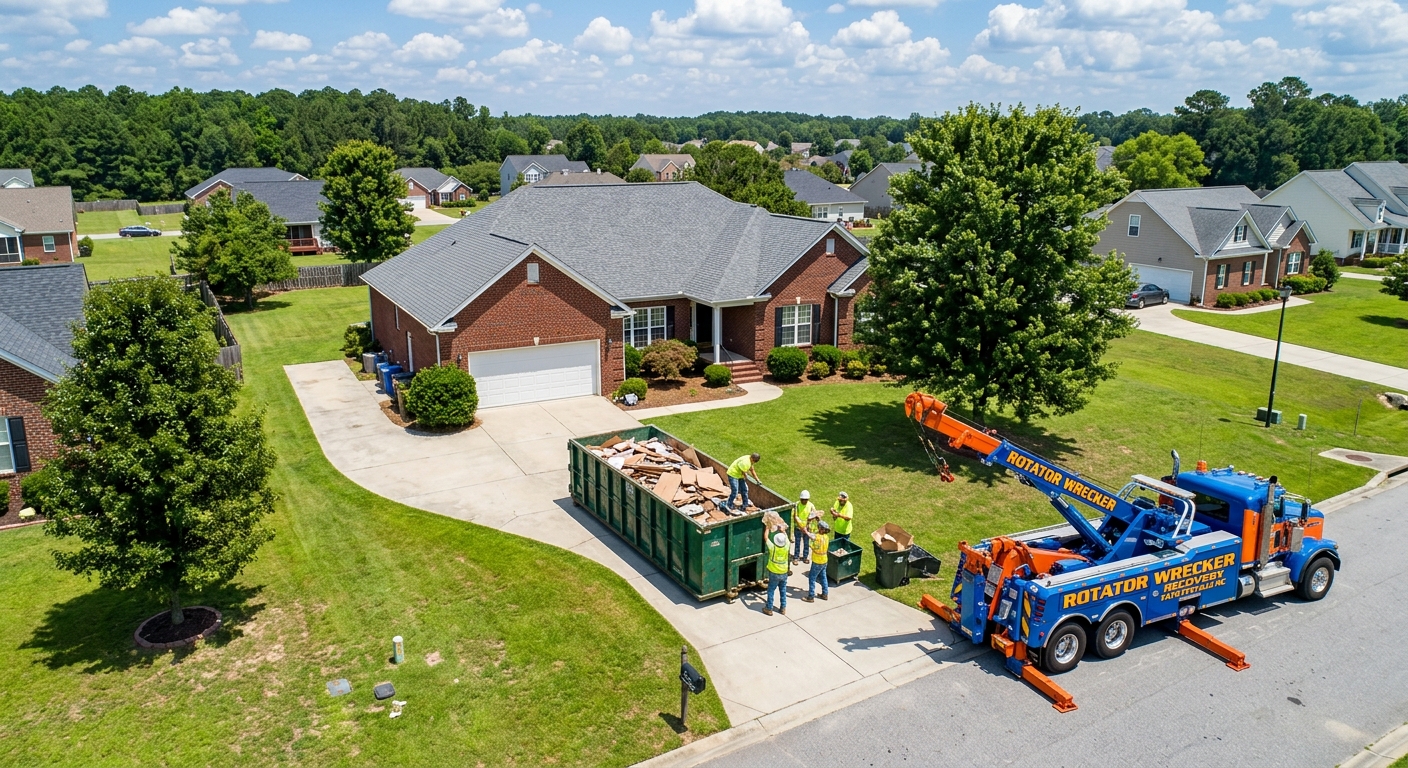
Commercial towing and fleet recovery services in Fayetteville demand providers who understand that your vehicles are business assets directly tied to revenue generation, contractual commitments, and operational schedules—making recovery speed, equipment protection, and coordination efficiency critical success factors beyond simply moving disabled vehicles. Our rotator wrecker and heavy duty recovery services serve commercial carriers, construction companies, logistics fleets, and equipment operators throughout Fayetteville, Cumberland County, and the wider Fort Liberty logistics corridor with the operational urgency and professional standards that commercial operations require. We treat every fleet recovery as a business emergency, not just a towing job, coordinating with your dispatch, maintenance, and insurance teams to minimize downtime and expedite return-to-service.
Fleet recovery services extend beyond individual incident response to include contract programs that establish pre-negotiated rates, direct billing arrangements, and priority response commitments for your organization's vehicles. We work with fleet managers to document your specific equipment, establish handling protocols for specialized vehicles, and integrate our dispatch system with your fleet management software—creating seamless coordination when emergencies occur. Our commercial towing capability serves Class 6 through Class 8 vehicles, construction equipment, specialty vehicles, and heavy equipment requiring transport or recovery throughout the Fayetteville area, with rotator capacity for your most challenging recovery scenarios.
- Priority response for fleet contract customers with guaranteed availability during your operational emergencies
- Direct billing and consolidated invoicing aligned with your accounts payable and fleet management systems
- Specialized equipment handling protocols documented in advance for your unique vehicles and equipment
- Preventive recovery planning identifying high-risk routes and pre-positioning strategies for your operation
- 24/7 dedicated fleet dispatch line bypassing general emergency queues during your high-priority incidents
The value of establishing a fleet recovery relationship before you need emergency service becomes apparent the moment your driver calls dispatch with a disabled vehicle: instead of searching for qualified providers while your asset sits idle and your schedule collapses, your dispatcher simply calls (910) 331-3791, references your fleet account, and receives immediate confirmation of equipment dispatch and estimated arrival. This operational efficiency reduces your incident management burden, improves your recovery time metrics, and demonstrates to your drivers that you've invested in support systems that protect them during roadside emergencies. Contact us to discuss fleet contract programs tailored to your operation's size, vehicle types, and coverage area requirements.
Insurance Coordination & Rapid Claims Processing
Insurance coordination during recovery operations determines how quickly you receive claim approval, whether recovery costs are fully covered, and whether the documentation supporting your claim satisfies adjuster requirements without lengthy disputes. Our rotator wrecker team has extensive experience working with commercial vehicle insurers, cargo insurance carriers, and fleet policy administrators—understanding the documentation standards, photo requirements, and incident details that expedite claims processing. We communicate directly with your insurance carrier when authorized, providing real-time incident updates, preliminary damage assessments, and photo evidence that supports rapid claims decisions and approval for recovery operations to proceed.
The rapid claims processing capability proves particularly valuable when your recovery involves significant costs—as rotator operations often do—where carrier approval is required before recovery begins or where you need immediate confirmation of coverage limits and deductible responsibility. We provide itemized estimates before beginning recovery when time permits, coordinate with adjusters to confirm approved procedures when incident complexity creates methodology questions, and deliver complete documentation packages within 24 hours of recovery completion to eliminate delays in your claim closure. This insurance-focused approach reflects our understanding that recovery operations create not just towing bills but insurance claims that impact your premiums, carrier relationships, and cash flow—making professional claims coordination a value-added service component rather than mere administrative courtesy.
Fleet Contracts & Preventive Recovery Planning
Fleet contracts establish the foundation for efficient emergency response by documenting rates, response time commitments, coverage areas, equipment availability, and coordination protocols before emergencies occur—eliminating the chaos of negotiating service terms when your vehicle is disabled and your operation is disrupted. Our fleet contract programs serve organizations operating 5 to 500+ vehicles with customized terms reflecting your fleet size, vehicle types, geographic coverage requirements, and call volume projections. We offer tiered pricing structures that reward higher call volumes, guaranteed response time commitments for your priority incidents, and dedicated account management ensuring your organization receives consistent service quality across multiple recovery events.
Preventive recovery planning takes fleet coordination beyond reactive emergency response to include route analysis, risk assessment, and strategic equipment positioning that reduces your incident impact before breakdowns occur. We work with fleet managers to identify high-incident routes in your operation (particularly I-95 corridor segments, Fort Liberty perimeter routes, and rural delivery areas where recovery access is challenging), analyze your historical breakdown patterns, and develop contingency plans for scenarios likely to impact your specific operation. This planning approach includes documenting equipment staging recommendations for your high-value loads, establishing communication protocols for night and weekend incidents, and identifying alternative transport arrangements when recovery timelines will miss delivery commitments—providing your dispatch team with pre-developed response plans rather than forcing real-time problem solving during emergencies.
Military Installation & Government Services
Military installation and government services require recovery providers who understand security protocols, access procedures, and the operational standards that military and government fleet managers demand. Our rotator wrecker team serves Fort Liberty military operations, defense contractors operating under military authority, and government vehicle fleets throughout Cumberland County with the professionalism, security awareness, and procedural compliance that military and government operations require. We maintain current background checks, installation access credentials, and the communication protocols required to operate efficiently in military and secure government facilities—eliminating access delays that extend recovery timelines when incidents occur on-base or in controlled areas.
Government services extend to municipal fleets, county vehicle operations, and state agency vehicles requiring recovery throughout the Fayetteville area. We provide the competitive pricing documentation, insurance certificates, and vendor qualification materials that government procurement requires, and we process billing through your specific payment systems whether that involves purchase orders, government credit cards, or invoicing through your accounts payable procedures. Our experience serving government clients means we understand your budget constraints, approval requirements, and documentation standards—providing service that meets your operational needs while satisfying your administrative and compliance obligations. Contact our team to discuss vendor qualification, contract vehicle establishment, or simply to add our service to your approved provider list for future emergency needs.
Why Fayetteville Trusts Our Rotator Wrecker Recovery Team
Fayetteville trusts our rotator wrecker recovery team because we've earned that trust through years of delivering on our promises during the moments that matter most—when your equipment is in crisis, your business is disrupted, and you need absolute confidence that your recovery will be executed safely, efficiently, and professionally. Towing Services Fayetteville Nc has built our reputation on operational excellence: showing up when we say we will, arriving with equipment that matches your needs, and executing recovery with the expertise that prevents additional damage while resolving your emergency quickly. We serve Fayetteville, Hope Mills, Spring Lake, Eastover, and the entire Cumberland County area with 24/7 availability, because trust is earned through consistency—being there every time, not just when it's convenient.
The foundation of trust in recovery services rests on three pillars: capability, reliability, and integrity. You trust that we have the rotator equipment and operator expertise to handle your specific situation—not just generic towing capability but specialized heavy recovery skills. You trust that we'll respond rapidly when you call, arriving within our committed timeline rather than leaving you waiting while uncertainty and costs mount. And you trust that we'll execute your recovery with absolute integrity—treating your equipment as carefully as we'd treat our own, billing transparently without surprise charges, and communicating honestly about challenges rather than overpromising and underdelivering. These aren't marketing claims—they're operational standards we demonstrate on every single recovery call.
- Proven track record of complex recovery operations executed safely throughout the Fayetteville commercial corridor
- Locally owned and operated business with deep roots in Cumberland County and commitment to our community
- Transparent pricing with detailed estimates and no surprise charges for standard recovery operations
- Comprehensive insurance coverage protecting your equipment during recovery and eliminating your liability exposure
- Long-term relationships with commercial fleets and logistics companies who trust us with their most valuable assets
When you call (910) 331-3791 for rotator wrecker recovery, you're not just hiring a towing service—you're engaging a recovery team that understands the stakes involved in your emergency and commits to delivering the expertise, equipment, and professionalism you need to resolve your crisis and get back to business. That's why fleet managers save our number, why logistics coordinators recommend us to their drivers, and why Fayetteville's commercial operators trust us with their most challenging recovery situations. Experience the difference that genuine expertise and operational excellence create—call us now or visit our facility at 931 Creekside Dr, Fayetteville, NC 28301 to discuss your recovery needs.
WreckMaster Certified Operators & Industry Credentials
WreckMaster certified operators represent the industry's highest standard for heavy recovery training, demonstrating mastery of rigging techniques, stabilization protocols, equipment operation, and scene safety that separates professional recovery teams from companies that simply own large trucks. Our rotator wrecker operators maintain current WreckMaster certifications across multiple specialties including heavy duty recovery, rotator operations, and advanced rigging—requiring ongoing training, skills assessment, and continuing education that ensures our team remains current with evolving equipment technology and recovery methodologies. These certifications aren't optional extras we pursue for marketing purposes—they're fundamental operational requirements that ensure every operator on our team can execute complex recovery